Graded Blog Post #3: Dialectical Journal for Emily Eternal pages 3-97

“”She’ll have to join us in progress,” Nathan says, not wanting to get into the physics of my existence.” (37) 

This quote highlights Nathan’s struggle for balance between his views of Emily as a technological advancement for the human race and as a valued personal relationship. Dr. Nathan Wyman built Emily to be a record of human memory to be preserved in space and studied by future civilizations, but he has come to appreciate her personality and recognize her humanity. In this scene, Nathan acknowledges Emily’s potential for both scientific and human connection to be progress, adding a deeper level to his characterization. Nathan is portrayed to be a man of science above all else, but forming a personal attachment to a machine created to be sent away may prove to be an issue in the coming future.

“Yes, humans are confused, misguided, damaged, threatened, and scared, but they’ re hardwired as a complex, beautiful animal capable of sacrifice, growth, and caring,” I’ d say, maybe surprising him with the intensity of my belief. “ They’ve evolved to be good to one another and prosper when they are. That’ s what adds depth to this tragedy. They’ re a species worth fighting for.” (67)

Despite being a machine, Emily shows more humanity than most of civilization around her. Since she has spent her existence inside the minds of others living in their memories and emotions, she arguably has a better perspective of what it means to be human than any of the scientists around her. This internal dialogue showcases Emily’s advanced regard for humanity, admitting its faults but recognizing its potential to grow and help others at the same time. It is Emily’s belief that humans learn hatred and are inherently caring, which she thinks is the most important message to pass on to future generations.

“ Fear is a tricky instinct, both inherited and learned,” Dr. Choksi continues. “ But it guides so much of what we, as humans, do — for good and ill. Your sense of right and wrong, of what is morally correct and ethical, is enviable because it is not informed by fear” (56)

Dr. Choksi shares Emily’s perspective in that the damage human beings do to one another is motivated by fear and uncertainty. It also exemplifies Emily’s potential to be the perfect candidate in passing down humanity’s legacy, her memories of civilization will not be clouded by learned bias and judgement. She will present society in its purest form, giving insight into each and every perspective and experience that is not her own. In its first hundred pages, this book offers advanced moral questioning for this generation and the ones to follow. 

Greetings from the American military-industrial complex. I know this is our first conversation, but I’m here as so many colonizers have been before to exploit all that is you, then leave again with the resource of yours I consider most valuable.” (86)

This passage presents an issue that is very prevalent in today’s societyl as well as the fictional one Emily lives in. It seems humanity gives into its learned hatred every generation, as civilizations seek to expand their territories by taking what doesn’t belong to them and forcing others to deal with it. As today’s society is built by the resources and land we took from others, the American military seeks to do the same in Emily’s time. It is up to Emily to start the expansion of civilization in a moral way, as she is the only one clear of judgement and empathetic towards all aspects of human experience.

 “ I realized there might be a way forward. In humanity’s last moments, our savior comes not in the form of some unseen, prayed-for God, but as an advanced computer program created and implemented precisely at civilization’ s penultimate moment.” (47)

This marks the moment in the book that society starts to see Emily as a divine figure. It is a key component to Emily’s character, as she becomes overwhelmed with responsibility to restart civilization as it should be. She starts to realize why people see her the way they do, as she holds the combined experience of humanity to pass on Earth’s legacy. Whoever comes into contact with Emily in the future will have access to the full extent of our planet’s knowledge, and whatever message our we want to send to others will be carried out by her. People will start to see her as the embodiment of our experience and progress, and that’s a huge responsibility for an individual to bear.
Blog #6

Mulholland Drive is classified as postmodern due to its unconventional narrative structure and emphasis on consumerism. As the movie is revealed to be a product of protagonist Betty’s dream, director David Lynch defies traditional story arc by tricking the audience into watching a fantasy created by the character for the film’s majority and then presenting what really happened near the end. As Betty and Rita enjoy a perfect night out at the opera, the viewers are sucked into a blue box where the film explains that Betty is really a washed-up actor who is envious of the stardom her ex-lover, Rita has gained. The movie was just a delusion of Betty, who wishes to start anew in Los Angeles, where she can build herself up to be a perfect celebrity and create the perfect relationship upon meeting Rita for the first time. In this relationship, Rita would be helpless and dependent on Betty, the only person or thing in the city she cares about. Throughout the film, we get hints that the characters may not be living a dream-like state, such as the monster, the cowboy, and the way people talk, but in the end the director challenges our  modernistic ordeg by presenting an alternate version of the characters and letting the viewers determine who they represented in the fantasy. In the final scene, Betty is unable to distinguish between reality and fantasy, as little people, representative of her self-doubts, invade her room and begin to torment her. She ends up taking her own life, once again rejecting our perception of traditional story-telling and leaving it up to the audience to interpret what really happened. The emphasis of consumerism comes into play with the scenes taking place inside Hollywood studios, as the portrayal of executives is taken to extremes as they are showcased as greedy, inhuman-like figures who ignore the director’s vision to focus on profit. They report to a shadowy corporate dictator, playing a role in Betty’s dream and presenting Hollywood as a dark organization conspiring to oversee her failure and Rita’s success in making it big.

Online Article: Entering the Conversation Rhetorical Self-Reflection

In my article I found it challenging to incorporate my own perspective because I knew very little on the subject. I tried to find a balance between incorporating summarization and my own opinions, because I was discussing a field I had little prior experience researching. I started and finished the article discussing how crucial space exploration is to fund, and tried to evoke emotion by painting a picture of what our planet could look like in the next few decades. I also tried a call to action, and encouraged my audience to pay attention to their impact on the planet and support research oriented organizations such as NASA. My logic was that by sending an increase of funds towards groups such as these, researchers would be able to look for viable solutions to save our planet or look elsewhere in worst case scenarios. Other than that, I felt there was little perspective I could add to a topic I knew little about, so my insight was limited to reminders about how important this exploration was or how surreal it was that scientists have designs such as “space elevators” in developmental stages. I summarized and gave credit to each article I researched, and split my paragraphs up by topic. While giving information, I tried to maintain an inquisitive tone that was hopeful but emphasized caution at the same time. I wanted to get readers excited by what they were seeing, as concepts like 3D printed “space gyms” are intriguing, but warned against harming our planet any further so ideas like these ever have to become reality.

Blog #5

Ridley Scott chose the Bradbury building to play the iconic role of the Toymaker’s shop in Bladerunner due to its eerie history and atmospheric setting. The location likely stuck out to him because of its combination of classical and futuristic styles, as it was commissioned in the eighteen hundreds but designed to resemble visions of the future in 2000. These choices emulated the world Scott was trying to create, so the Bradbury building fit in perfectly with a planet of cyborgs inhabiting a neo-noir Los Angeles. Its geometrically patterned stairways, wrought-iron railways and open cage elevators coincided with Scott’s imagination, and since the building hadn’t been utilized in decades, it wasn’t too hard to make the place seem haunting and run-down. The location itself radiated an ominous energy, as it was even created by an architect who consulted his dead brother by way of a predecessor to the modern day ouija board. While other films such as Marlowe and 500 days of summer, saw the potential in the area to represent just another corporate estate, Scott used the history of the site to create something unique to both himself and what the building represented.

Blog #4

Double Indemnity serves as a staple of film noir, a model complete with all the tropes of the genre that other films can refer to while offering their own unique take on the style. It’s the kind of picture that comes to mind when envisioning the genre, full of atmospheric black and white shots of city landscapes, hard-boiled detectives and the charming yet manipulative figure of the femme fatal. Other films, such as Devil in a Blue Dress and Chinatown borrowed from Double Indemnity, using the stereotypes of the genre as foundation but adding unique takes to tell the stories they want to tell. For example, Devil in a Blue Dress tells the conventional noir story through an African American lens, leading the protagonist through the detective’s journey in a system that works against him. It has contains all the elements of the genre, such as the grim atmosphere and the femme fatal character, but adds to the story with unique narrative and message about minority life in Los Angeles. Chinatown does the same, and brings its own twist to the genre by setting the story thirty years in the future. It adapts the formula to coincide with modernity, and replaces gritty black and white colors to introduce a new perspective of a well- established formula. The city of Los Angeles serves as the central antagonist of both films, doing whatever it can to bring about the failure of the main characters. The corrupt mayoral candidates of the city send men after Denzel Washington’s character to keep their scandals secret, and Jack Nicholson’s Jake Gittes works alone as he tries to expose the fraudulent water business set on destroying the town. The city serves as a corporation in both cases, ignoring the wellbeing of its citizens to serve the self interests of crooked elites. Both Washington and Nicholson seek to bring justice to their communities, and try to uncover the darkness of their leadership in order to create a better city for the people. 

Online Article: Entering the Conversation (Final Draft)

With all the information we have surrounding global warming and the effects it has on our planet, one would think we would be collaborating towards a solution. While some action is being taken to reduce carbon emissions and put limits on deforestation, many professionals believe it is not enough. This is why I believe funding space travel and exploration should be a top priority among lawmakers and the general population; as we could develop a plan if the atmosphere continues to deteriorate at this rate. Research of the solar system could benefit in two ways; either we discover a solution to save our planet, or we locate a new one to live one altogether. Scientists have identified several courses of action to take spanning across both ways of thinking, and have discovered many examples of irrevocable evidence proving space exploration to be essential to human survival.

Researchers in this field have discovered pockets of valuable minerals floating across space by way of asteroids and orbiting moons, and determined them to be beneficial mining locations lucrative for both big businesses and the environment at the same time. As Mike Wail describes in his article “What the Next 50 Years Hold for Human Spaceflight” The precious metals hidden in asteroids or the moon’s “ample water stores” (Mike Wail, 7), could substitute for those on Earth, protecting the atmosphere and countless acres of land and forest. By funding space exploration, we would be working towards better telescopes and rovers, with the capability of finding and extracting the highest quality of minerals from outer space without damaging our planet. 

Of course, even with all these discoveries, the notion that our planet is beyond saving remains. In this case, scientists have developed an elaborate plan to sustain human life on Mars or another nearby hospitable option. The article “What is the future of space travel?” published by Royal Museums Greenwich, states that with funding, NASA “set(s) the ambitious goal of returning humans to the Moon by 2024 and establishing a sustainable human presence on the Moon by 2028” (10). NASA plans to have established a functioning society within the first few years of colonization. New citizens will reach settlements by way of antimatter rockets, “space elevators”, or methane powered spacecrafts fueled with gas from Jupiter. Despite how surreal it may sound, this reality is very likely to become our own over the next few decades.

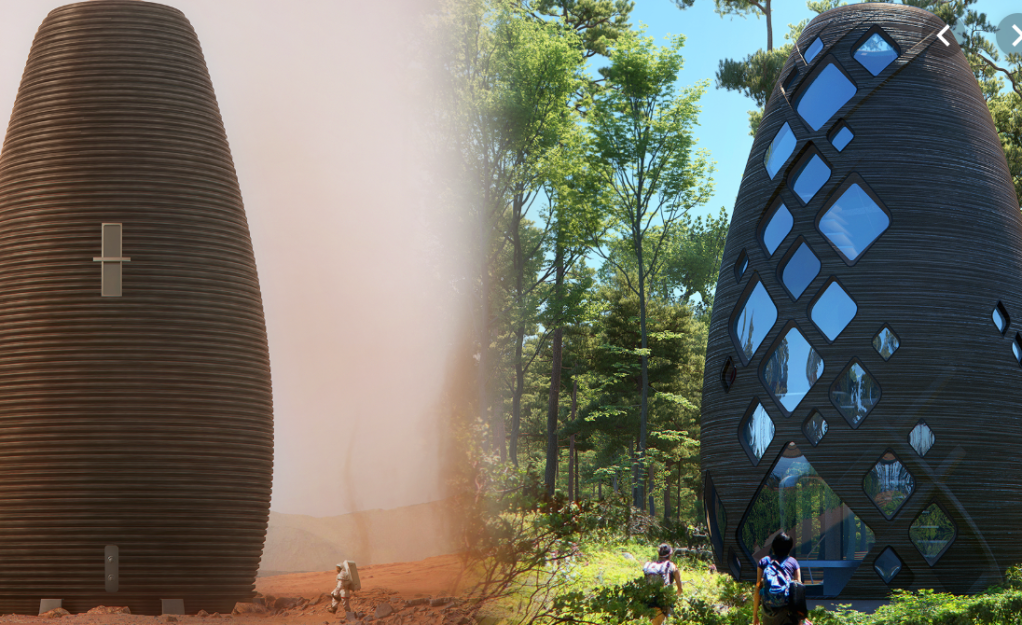
In his article This is how we’ll leave Earth for good,” author Colin Stuart lists several clear-cut procedures and dilemmas reported by NASA that will surface as we begin to settle elsewhere. In July of 2018, a team of scientists in Arkansas received $100,000 for their 3D printed model of a sustainable living structure capable of housing thousands on Mars. In this model, robot printers would be sent to the planet to gather materials from lunar soil and “print” out the infrastructure of our new society. NASA has also constructed a plan to cultivate a surplus of agriculture and a viable source of food. Stuart explains that the lack of resources NASA has makes it impossible to nurture livestock off world, and elaborates on the developing technology capable of growing vegetation such as lettuce, kale, and potatoes. A machine known as PHARMER is equipped to harvest crops such as dwarf wheat and Arabidopsis (flowering rockcress), and “Automated mini-factories known as biofoundries” (Stuart, 32) even work to create millions of new forms of plants all together, specifically designed to thrive in Mars’s lifeless environment.

Concept of what the 3D printed model could look like on Mars.

Finally, NASA expands on some of the more human aspects of creating life on Mars. The organization explains that “The first settlers will need to draw up a legal system to maintain law and order, perhaps based on our current laws here on Earth. Jobs will need to be created and assigned to those with suitable skills, and institutions will have to be set up quickly to provide medical, educational and economic services.” (Stuart, 19). Aside from this, NASA also addresses a number of concerns related to the construction of a new society, such as staying fit, keeping sanity, and starting families. As humans move offworld, our bodies must adapt to the changing laws of gravitational pull, something their recently conceived of “space gyms” can make easier. Travelers will have to adhere to a “strict exercise plan” to counter the weakening of bones and quicken the pumping of the heart to “starve off muscle and bone loss” as much as possible. We’ll even have to create our own “microbiomes” to support the life of microscopic bacteria that keeps us healthy.  

Finally, NASA brings the moral questioning and ethical dilemmas involved with raising a family on another planet to light. “It is ethical to raise a child in space?” Stuart asks, comparing the decision to risks ancient Polynesians took when bringing their families thousands of miles across the ocean to begin a new life. Stuart highlights NASA’s research of potential risks, including higher infant mortality rates and the developmental effects of raising a child in an atmosphere devoid of oxygen. (What will life be like for a child who has to spend the majority of it cooped up indoors?) Reproduction itself may even prove to be an issue, as the weightlessness of space will make it difficult for sperm to direct itself, and cosmic radiation from the sun may result in an increase of infertility. There are many factors to consider, and debate circles through the scientific community as to the exact number of people that should be brought up to pioneer this society.

NASA seeks to work towards solutions to avoid these outcomes, and it is astounding to see just how far ahead they have thought to confront any issues that may come about. With additional funding, the organization can take the steps needed to prevent the onset of an inhospitable planet, or to lay the groundwork necessary for starting something new. No matter which road we take, and no matter how rooted in science fiction both may them sound, they both seem equally scary. Both revolve around a fear of the unknown, and not seeing what comes next, whether it’s fighting to save a planet we may no longer have or looking to colonize a new one altogether. No matter which path we decide to take, scientists at NASA seek to make the transition as clear and simple as possible, and I’d say our future depends on just how much we decide to support them.

Online Article: Entering the Conversation (Rough Draft)

With all the information we have surrounding global warming and the effects it will have on our planet, one would think we would all be collaborating towards a solution. While some action is being taken to reduce carbon emissions and put limits on deforestation,  many professionals believe it will not be enough. This is why I believe funding space travel and exploration should be a top priority among lawmakers and the general population; as we could develop a plan if the atmosphere continues to deteriorate at this rate. Research of the solar system could benefit in two positive ways; either we find a solution to save our planet, or to locate a new one to live one all together. Scientists have identified several specific courses of action across both ways of thinking, and have discovered many examples of irrevocable evidence proving space exploration to be essential to our survival.

Research in this field have discovered sources of valuable minerals floating across space by way of asteroid or orbiting moon, and have determined them to be beneficial mining locations lucrative for both big businesses and our planet at the same time. As Mike Wail describes in his article What the Next 50 Years Hold for Human Spaceflight” The precious metals hidden in asteroids or the moon’s ample water stores” (Mike Wail, 7), could take the place of those on Earth, protecting the atmosphere and countless acres of land and forest. By funding space exploration, we would be working towards better telescopes and rovers, with the capability of finding and extracting the highest quality of minerals from outer space without damaging our environment. 

Of course, even with all these discoveries, the notion remains that our planet is beyond saving. In this case, scientists have created an elaborate plan to sustain human life on Mars or another nearby hospitable option. The article “What is the future of space travel?” published by Royal Museums Greenwich, states that with funding, NASA has “set the ambitious goal of returning humans to the Moon by 2024 and establishing a sustainable human presence on the Moon by 2028” (10).NASA plans to have established a functioning society within the first few years of the colonization of another planet. New citizens will reach settlements by way of antimatter rockets, “space elevators”, or methane powered spacecrafts fueled with gas from Jupiter.

In his article “This is how we’ll leave Earth for good,” author Colin Stuart lists several clear-cut procedures and dilemmas reported by NASA that will surface as we begin to settle offworld. In July of 2018, a team of scientists from Arkansas received $100,000 for their 3D printed model of a sustainable living structure capable of housing thousands on Mars. If needed, robot printers would be sent to the planet to gather materials from lunar soil and “print” out the infrastructure of our new society. NASA has also constructed a plan to cultivate a surplus of agriculture and viable sources of food. Stuart explains the lack of resources NASA has to nurture livestock, and elaborates on the developing technology capable of growing vegetation such as lettuce, kale, and potatoes. A machine known as PHARMER is equipped to harvest crops such as dwarf wheat and Arabidopsis (flowering rockcress), and “Automated mini-factories known as biofoundries” (Stuart, 32) even work to create millions of new forms of plants all together, specifically designed to thrive in Mars’s lifeless environment.

Finally, NASA expanded on some of the more human aspects of creating life on a new planet. The organization explained that “The first settlers will need to draw up a legal system to maintain law and order, perhaps based on our current laws here on Earth. Jobs will need to be created and assigned to those with suitable skills, and institutions will have to be set up quickly to provide medical, educational and economic services.” (Stuart, 19). NASA addressed a number of concerns related to the construction of a new society, such as staying fit, keeping sanity, and starting families. As humans move offworld, our bodies must adapt to the changing laws of gravitational pull, something recently conceived of “space gyms” can make easier. Travelers will have to adhere to a “strict exercise plan” to counter the weakening of bones and quicken the pumping of the heart,  and “starve off muscle and bone loss” as much as possible. We’ll even have to create our own “microbiomes” to support the life of microscopic bacteria that keeps us healthy.

Finally, NASA brings up moral questioning and the ethical dilemmas involved with raising a family on another planet. “It is ethical to raise a child in space?” Stuart asks, comparing the decision to bring up a child in the unknown to the risks ancient Polynesians took crossing the ocean thousands of miles to begin a new life. Stuart brings into play NASA’s look into potential risks, including higher infant mortality rates and the developmental effects of caring for a child in an environment too dangerous to be outside. Reproduction itself may even prove to be an issue, as weightlessness is space will make it difficult for sperm to direct itself, and cosmic radiation from the sun may result in an increase of infertility. There are many factors to consider, and debate circles through the scientific community as to the exact number of people that should be brought up to pioneer this society.

NASA seeks to work towards solutions to avoid these outcomes, and it is astounding to see just how far ahead they have thought to confront any issues that may come about. With additional funding, the organization can take the steps needed to prevent the coming of an inhospitable planet, or to lay the groundwork necessary for starting something new.

Graded Blog Post #2: Engaging in Research

 How big a part will space travel play in average living throughout the coming century?

Source #1: What the Next 50 Years Hold for Human Spaceflight?  Mike Wail

Purpose: To inform readers, particularly those with an interest in science, of the recent advancements in space travel scientists have made and their plans for exploration over the coming 50 years.

“As a result, by 2061, millions of people may well have gone to space, and thousands may be living there, experts say. We may see permanently manned outposts on the moon, and boots will likely have crunched into Mars’ red dirt.”

“Orbital tourist trips might not be far behind suborbital jaunts. Various companies — including Space Exploration Technologies (SpaceX for short) — are developing crewed vehicles that could take paying customers to the International Space Station.”

“Those other commercial opportunities may include mining asteroids for precious metals, or extracting the moon’s ample water stores to produce rocket fuel, which would be sold to spaceships at orbiting filling stations.”

This article fits into my line of inquiry because it explains, in general terms, what space travel will look like for the rest of the century. It briefly goes over human settlement on Mars, the resources we’ll harvest from other planets and asteroids, the future of rockets and rovers we’ll use to explore and even luxury space station vacations NASA will offer to anyone who can afford it. This article is short, but it covers a lot of ground in terms of different aspects of space exploration and dependency.

Source #2: What is the future of space travel? Royal Museums Greenwich

Purpose: A summary of the many ways we’ll rely on outer space in the coming future, ranging between exploration, leisure, and settlement.

“A number of commercial companies are also developing spaceflight capabilities, including SpaceX founded by Elon Musk, Blue Origin established by Amazon CEO Jeff Bezos, and Richard Branson’s Virgin Galactic. By 2030, it has been estimated that the global space market could be worth £400 billion. Both space agencies and commercial companies have a number of different  objectives for the next 50 years, including:

  • Automated and robotic exploration of the Solar System and beyond
  • Telescopic exploration of deep space
  • Development of innovative spacecraft
  • Crewed spaceflight and settlements on planets
  • Space tourism
  • Mining of other planets.”

“In the last decade, companies such as Virgin Galactic, Airbus and Blue Origin have begun developing commercial spacecraft to send private customers into space. Currently, businesses are taking reservations for trips into the upper atmosphere, where patrons can experience zero-gravity and observe the curvature of the Earth. NASA has also announced plans to allow private individuals to visit the International Space Station, with the first flights scheduled for 2020.”

“NASA has been set the ambitious goal of returning humans to the Moon by 2024 and establishing a sustainable human presence on the Moon by 2028”

This article covered the same information as the first, but went a lot deeper in terms of specifics. It explained more about the business side of space travel, and the economic gains companies can make in growing/mining minerals on other planets and asteroids. It also went deeper into the planned future development of more advanced telescopes and rovers, which I thought was really interesting, because we can get a much better understanding of the unknown. 

Source #3: This is how we’ll leave Earth for good  Colin Stuart

Purpose: To explain to its audience, primarily those who worry about the future of our planet and climate change, of what it will look like to move the human population into space. It goes into great detail of what a space society will look like, how we’ll get there, farm materials, grow a staple food supply, raise and create families, and even stay fit and healthy.

A 2012 World Wildlife Fund report estimated that by 2030 we’ll need the equivalent of two planets in order to sustain our lifestyles. And it’s pretty much a certainty that we’ll have to move at some point, with the Sun forecast to increase in brightness and boil away our oceans in around a billion years’ time.

“Plans are already underway. In July this year, NASA announced the five winners of its $100,000 ‘3D-Printed Habitat Challenge’ to design a dwelling that would enable people to live and work on Mars, and which could be built using local materials and 3D-printing technology… Putting up a habitat is a good start, but looking longer-term we might want to ‘terraform’ our new home and make it more Earth-like. This wholesale makeover means fundamentally altering the atmosphere and temperature to create an environment that’s more amenable to liquid water and life.”

“The first settlers will need to draw up a legal system to maintain law and order, perhaps based on our current laws here on Earth. Jobs will need to be created and assigned to those with suitable skills, and institutions will have to be set up quickly to provide medical, educational and economic services.”

This article was the most interesting to me, because it was really specific in informing the reader of the exact plan humans will need to follow when colonizing another planet. It was amazing to see how far ahead some people had thought, as it went into detail about the societal system inhabitants will need to establish, the ways we’ll grow a sustainable food supply, the need for “space gyms” so humans can stay healthy, and even raised some tough moral questioning in terms of what it would look like to and raise a family and create a childhood on a foreign planet.

Summary: To be honest, I only picked this subject because it was a little more interesting than the rest, but once I got deeper into it, the more amazed with it I became. Like I said, it was fascinating to see how far ahead scientists had thought, and in my research I would like to touch upon what it would look like to create a society on another planet as article three did. I am still going to include the future of space travel for leisure in my inquiry, but I’m going to go more in the direction of article three for the next step in my research.

“The Devastation of Human Life is in View” Analysis

The planet is changing, and the human race is going to need to work towards a solution fast if we want to survive. David Wallace-Wells makes that message very clear in his 

article,”The Devastation of Human Life is in View” in which he presents indisputable evidence of climate change that even he himself was blind to at first. In a way, his admittance of his own ignorance is a method of Ethos, as he proves himself to be credible as he appears as an average citizen living under the threat of climate change, just as his readers do. Wells begins the paper by elaborating on stories he has collected of both human and animal lives affected by shifting temperatures in years past. He admits that he once dismissed these stories as a unique type of sympathy causing (pathos) allegory media outlets had created, such as a group of researchers trapped in an arctic outpost supported by melting ice, but soon realized that these stories hinted at much more. he change in the weather was a major figure in global politics, a keystone in the Syrian Refugee crisis, and a time bomb that will lead to record numbers of migrants fleeing from a flooding Bangladesh and a drying Africa and Latin America. Wells uses a combination of fear and statistics (logos) explains that the human race will inevitably reach a level known as 2C, a threshold governments at the 1997 Kyoto Protocol believe coincide with “catastrophe”; as flooded cities, drying climates and monsoons clash with civilization in what foriegn minister of the Marshall Islands says will result in “genocide” (4). The article goes on to explain that since the Kyoto Protocol was reached just 20 years ago, our planet has produced more emissions than ever before. Planetary history gives us record of rising temperatures correlating with rising sea levels, and recent findings have suggested that Earth could be on course to a 4 or 5C environment as soon as the year 2100, a world hardly hospitable for any life at all. 

Wallace-Wells begins to describe global affairs as it currently stands, as he explains that the majority of the burning in the atmosphere has occurred in the last 25 years. He encourages readers to take action, and calls attention to the numerous fires that have devastated the California landscape over the past year. He uses Logos to present statistics of the damage the caused by the most extreme of those, the Thomas Fire, growing 50,000 acres in one day and forcing 100,000 Californians out of their homes. Wallace-Wells explains that he used these numbers to show readers how much control we have over climate change, and writes that the 20 worst fires in California’s history took place in the autumn of 2017, putting the scale of the crisis into perspective.. Wallace-Wells ends the paragraph with a sad story of Pathos, telling the tale of an older couple who took shelter in the pool to escape the disaster, with only one of the two emerging. Several other rhetorical devices are used throughout the passage, such as the reference to recognizable figures, writing how these catastrophes humanized icons we looked up to, such as the Kardashians who the world watched the evacute their homes. He mentions a second force of other notable landmarks damaged by the fire, such as the burnt wine fields of Napa Valley and the gloomy orange skies encompassing Disneyland, emphasizing how locations we thought of as timeless could be damaged by the onset of climate change.

Wallace-Wells expands the piece to highlight how the increasing amount of natural disasters affect the rest of the world. He references other countries changed forever by disaster, and again uses Logos to make mention of the 260,000-600,000 worldwide citizens who die annually by way of self produced smoke. Wallace-Wells references the increasing threat of fires in the Arctic circle, burning thousands of acres of ice and forest in Greenland and Sweden. Fires erupt along the Greek seaside, the Russia-Finland Border, and the British countryside, each considered the biggest in their country’s history. Wallace-Wells highlights even more statistics with the threat of rainfall sparking mudslides in Santa Barbara, tree falls leading to massive jungle fires in Indonesia, and the 100,000 fires continuing in the Amazon as Brazil’s president promises to open the rainforest to even more human development. Scientists predict that this policy will release about 13.12 gigatons of carbon into the air, more than twice the amount emitted by our country in the last two years.

He closes the piece with a grimly hopeful note, as he concludes that the likely range of warming this century, 3-3.5 C, will “unleash suffering beyond anything that humans have ever experienced”, but not the worst it could be. We can create new solutions in that time, technology that will extract CO2 from the air and cool the planet and perhaps even save it. Wallace-Wells concludes the piece with a bit of Ethos and moral questioning, as he responds to the dilemma of having children in this time. He introduces his one year old daughter, and admits to being ignorant and ignoring the issues she’ll have to deal with in her lifetime. He writes that the fight isn’t over, and that the key to saving our world rests in however his daughter and the rest of our future generation choose to act.

\

Blog #3

Hollywood is just an illusion in that presents a picture of immortality to all who search for fame, hoping that their name and face will be remembered forever by the audiences who idolize them across generations to come. While this is partially true, the industry is fueled by audiences whose interests change in an instant, leaving studios to change their format and hold little regard for the people they leave behind in the process. This cycle is seen in its entirety in Sunset Boulevard, as the film follows aging and forgotten silent movie star Norma Desmond. Desmond couldn’t keep up with the pictures as they sped by her, moving from silence to sound, staying isolated in her crumbling mansion, convinced that the world eagerly awaits her return. She spends her time watching old films she stars in, writing scripts, and buying fancy clothes so she can look as young as ever when her revival finally comes. She craves human connection, and falls head over heels for Joe just days after he starts living with her and paying attention. When she falls for the illusion that director Cecil B. Demille is interested in adapting her script, she instantly drives to the studio to relive her fame, looking as elegant as ever. Demille and Joe don’t want to end her delusion, and act as if they are interested in working with her, while she really has no place in an industry that has changed drastically and moved on across 20 years. As Joe explains to Mr. Demille; “You don’t yell at a sleepwalker—he may fall and break his neck…. She was still sleepwalking along the giddy heights of a lost career”. In Faulkner and Schulberg’s take on show business, characters still chase after fame even after becoming aware of these costs.  For Ira in Golden Land, the allure of fame causes him to act immorally and become distant from his mother, valuing his life of luxury and relevancy over family. Fame sometimes causes people to take themselves for granted, to live in denial and believe they’ll always have their stardom, only coming to terms with reality when it becomes too late.They live lives of hardship, isolated from the rest of the world, unable to keep in touch with themselves. Jenny in A Table at Ciro’s knows this, shaking off her feelings of discomfort to keep up a charming disposition while dancing with A.D Nathan, to hopefully one day end up with a starring role in the pictures. While he, on the other hand, begins to accept the fragility of stardom, and “thought how frightening it would be to enter Ciro’s without the salaaming reception he always complained about but would have felt lost without.” (276)

Design a site like this with WordPress.com
Get started